Vinyl and wood are the two most popular privacy fence materials in Huntersville and around Lake Norman. Both can look great and last for years. But our hot, humid summers, heavy rain and red clay soil treat them very differently. Here’s an honest comparison to help you choose.
How North Carolina’s climate affects fences
Central North Carolina fences face a few specific challenges:
- Humidity and rain keep wood damp for long stretches, which encourages mildew, swelling and rot.
- Strong summer sun breaks down wood surfaces and can fade lower-quality finishes.
- Termites and other wood-boring insects are common in the Southeast.
- Red clay holds water around posts and stains the bottoms of fences.
Wood fences: the pros
- Lower up-front cost, especially pressure-treated pine
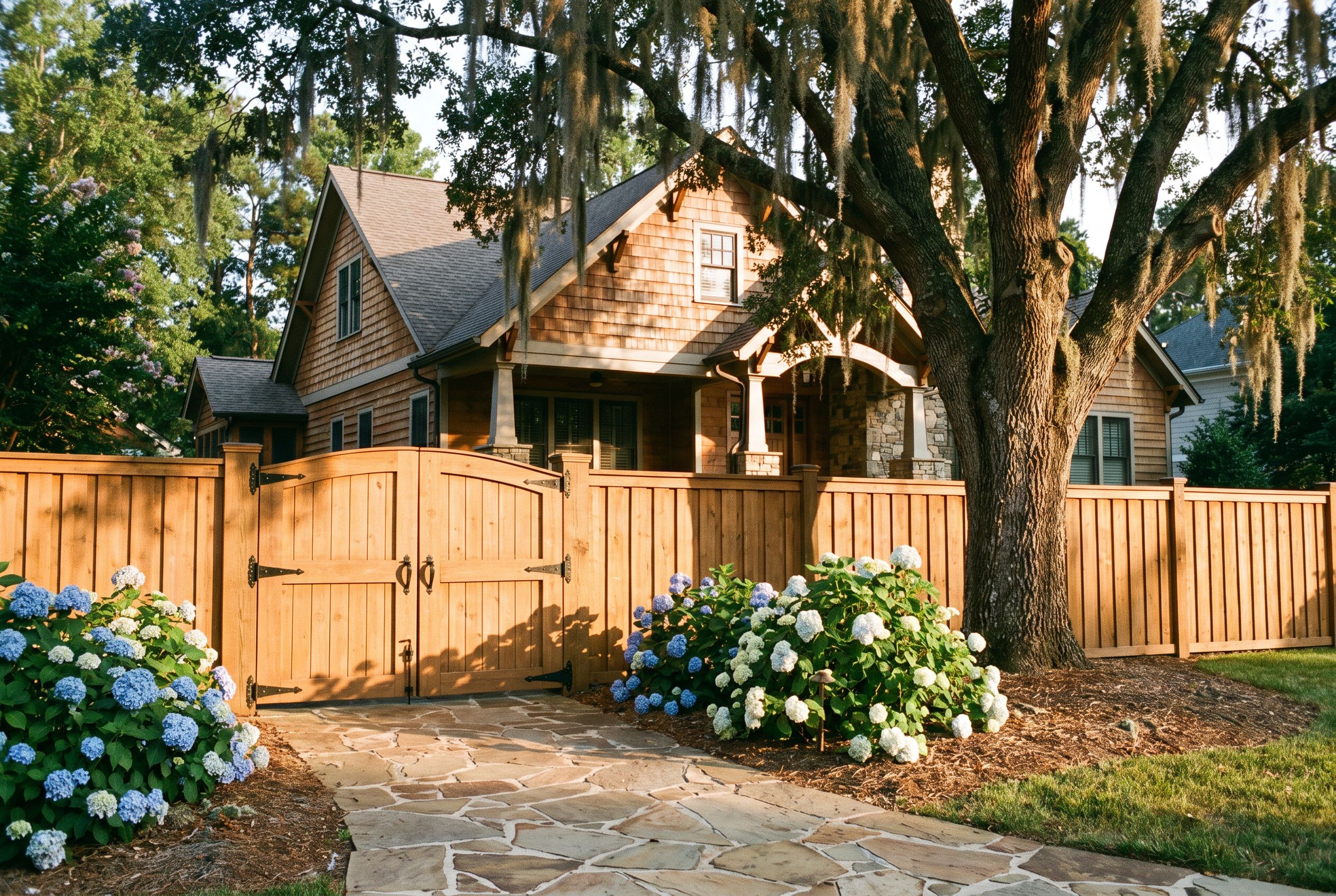
- Natural warmth and texture that suits nearly any home
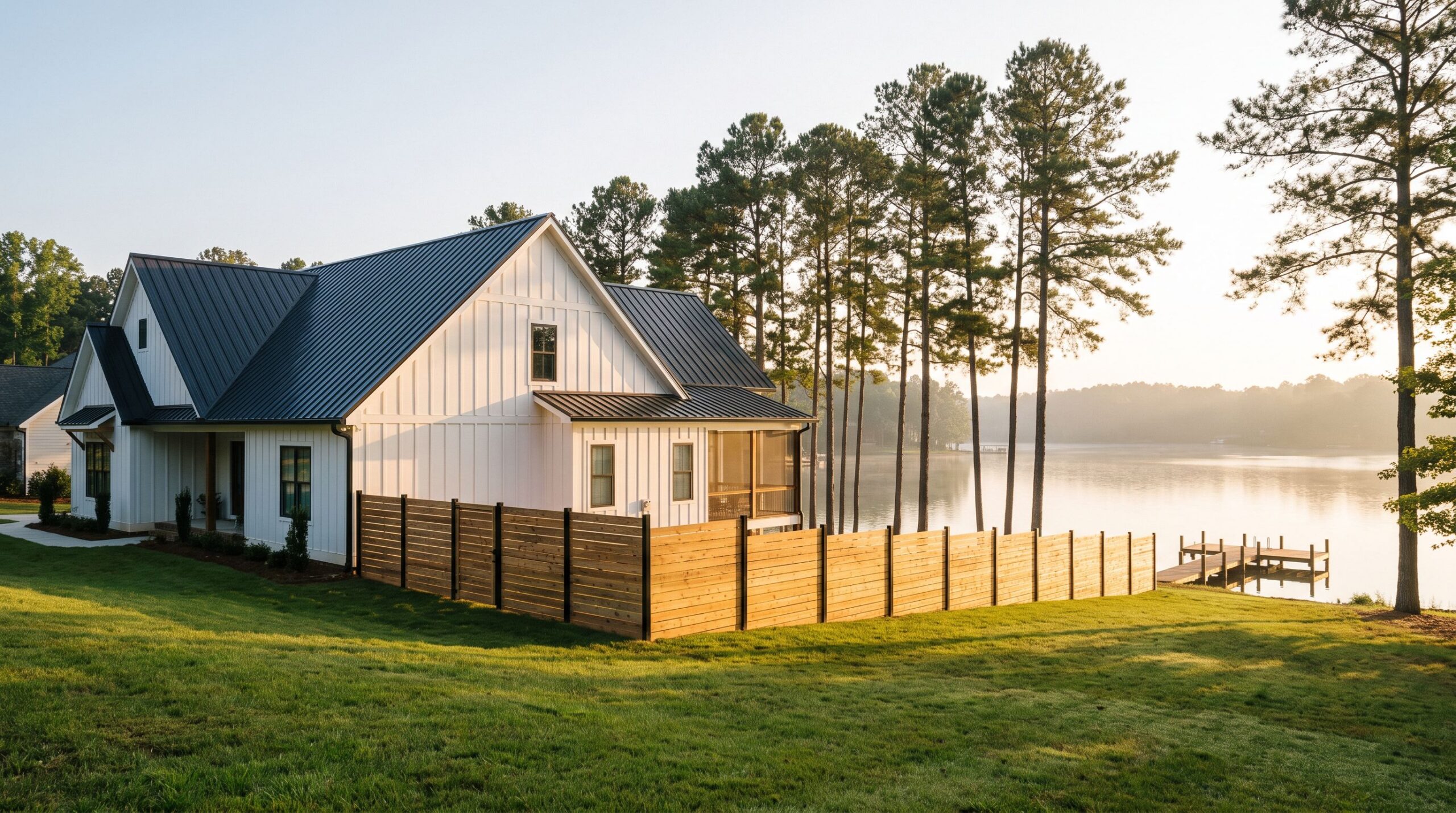
- Highly customizable: any height, cap, trim, gate or style, including horizontal and shadowbox designs
- Easy to repair: individual boards and posts can be swapped out
Wood fences: the trade-offs
- Needs staining or sealing every two to three years to resist moisture and UV
- Can warp, crack or cup over time
- Vulnerable to rot and insects if left unprotected
- Grays naturally unless it’s maintained
Vinyl fences: the pros
- Won’t rot and isn’t food for termites
- No painting or staining, ever. An occasional rinse keeps it clean.
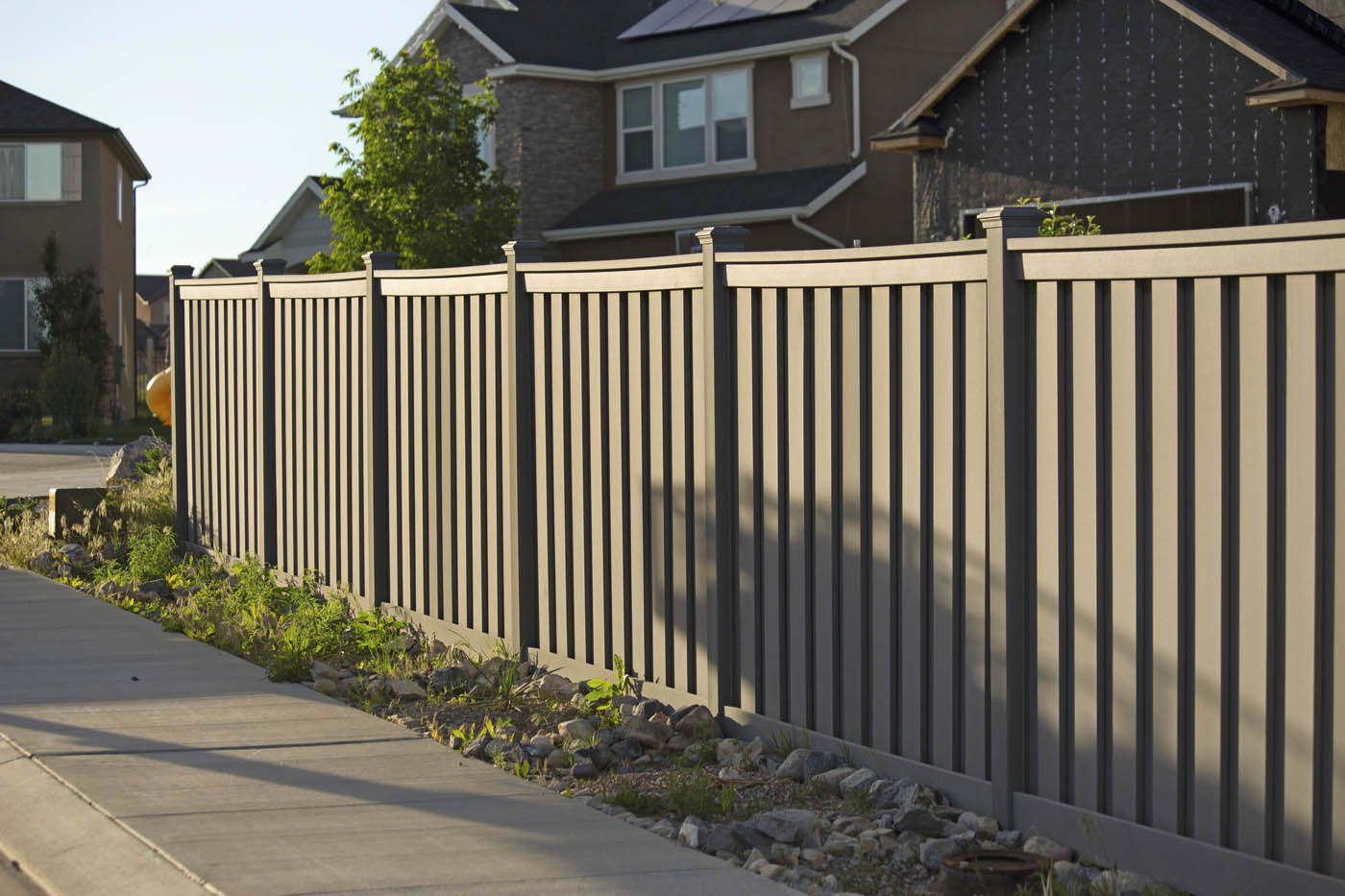
- Consistent, clean look that many HOAs like
- Kid- and pet-friendly: no splinters or exposed nails
Vinyl fences: the trade-offs
- Higher up-front cost than pressure-treated wood
- Fewer custom design options than wood
- A damaged panel usually gets replaced rather than patched
- Mildew and red clay can collect on the surface, though it washes off
Side-by-side summary
Choose wood if you want the lowest up-front price, a natural look or a highly custom design, and you don’t mind periodic staining.
Choose vinyl if you want a fence you can mostly forget about, prefer a crisp uniform look, or have a pool, kids or pets.
What about lifespan?
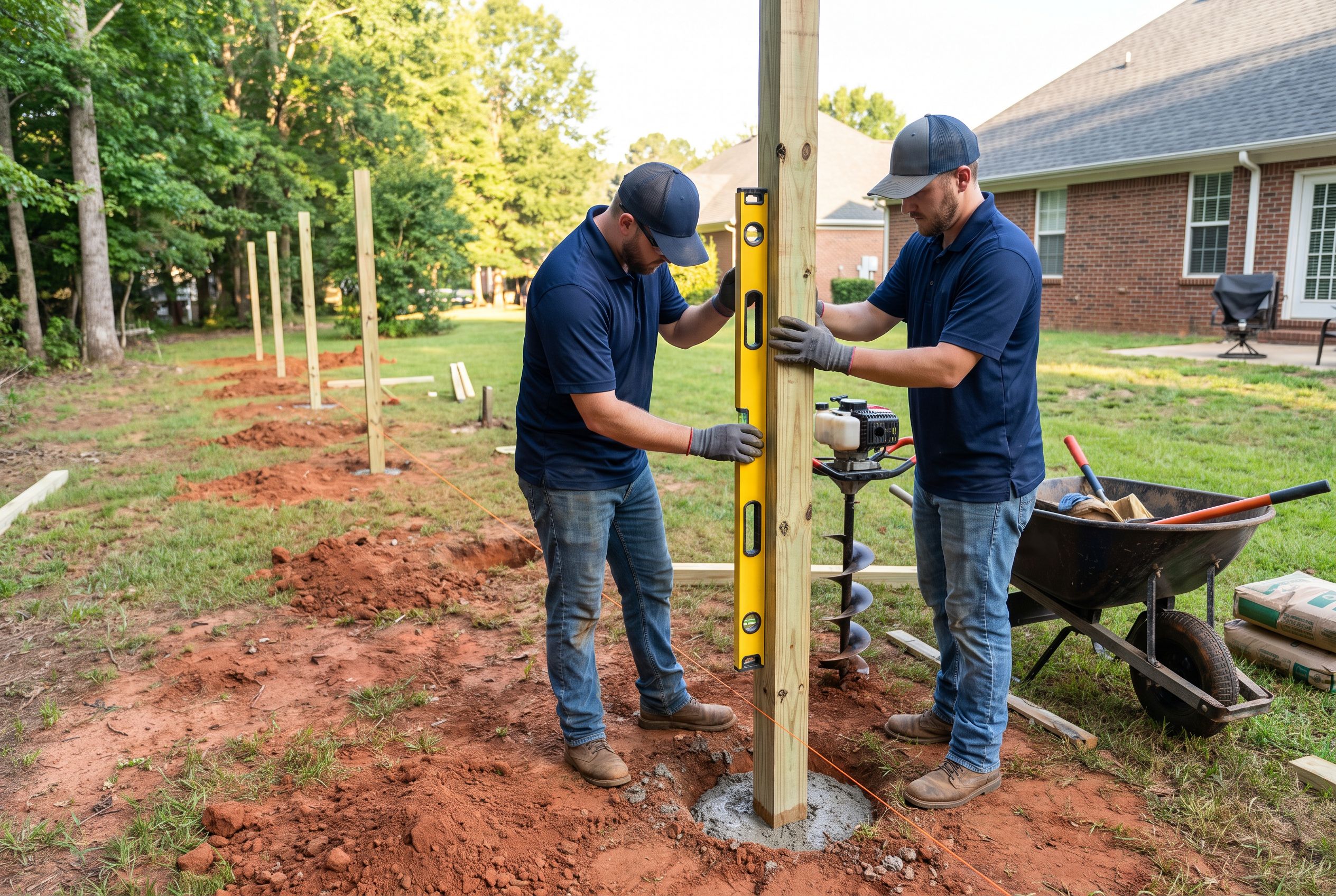
A well-built, well-maintained wood fence commonly lasts 15 to 20 years in our area. Cedar and regular staining push that higher. Quality vinyl is designed to last longer with far less upkeep. In both cases, installation quality matters as much as material. Posts set at the proper depth with good drainage are what keep a fence straight through Carolina storms.
Don’t forget the middle ground
If you love the look of wood but not the maintenance, composite fencing gives you wood-grain boards that resist rot and never need staining. It’s a premium option, but popular around Lake Norman outdoor living spaces.
Explore each material in more detail on our wood fencing and vinyl fencing pages.
Still deciding? Book a free estimate online at our booking page or call 980-404-9876. Zero dispatch fees.