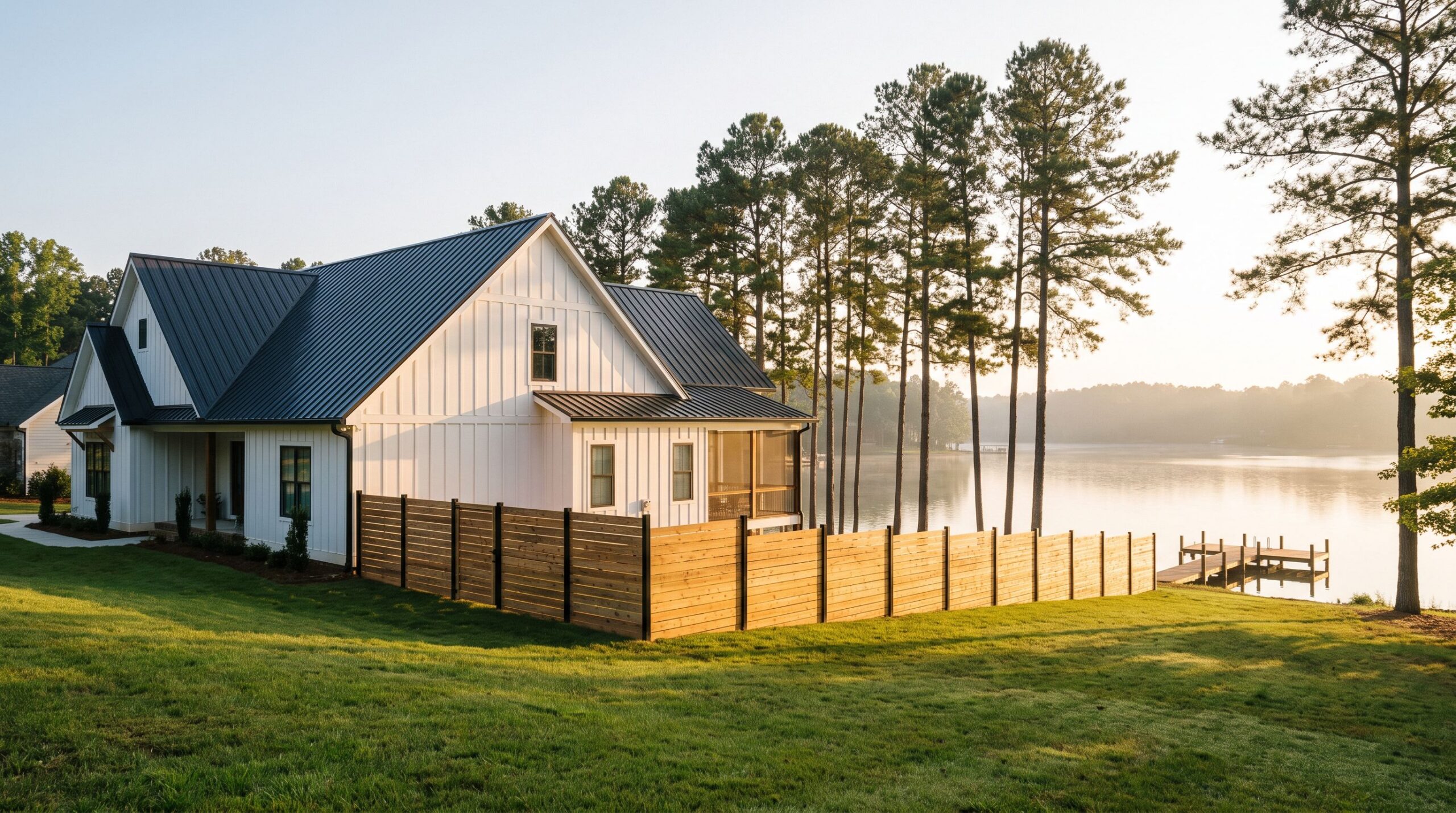
Horizontal fences have gone from a niche modern look to one of the most requested styles we install around Huntersville and Lake Norman. Their clean lines make a yard feel wider and more contemporary, and they pair well with everything from new construction to updated traditional homes. Before you commit, here’s what to know about cost, durability and design.
What drives the cost of a horizontal fence
A horizontal fence typically costs more than a standard vertical privacy fence of the same length and height. The main reasons:
- More material: Horizontal boards are often thicker or wider, and many designs use a top cap and trim boards for a finished look.
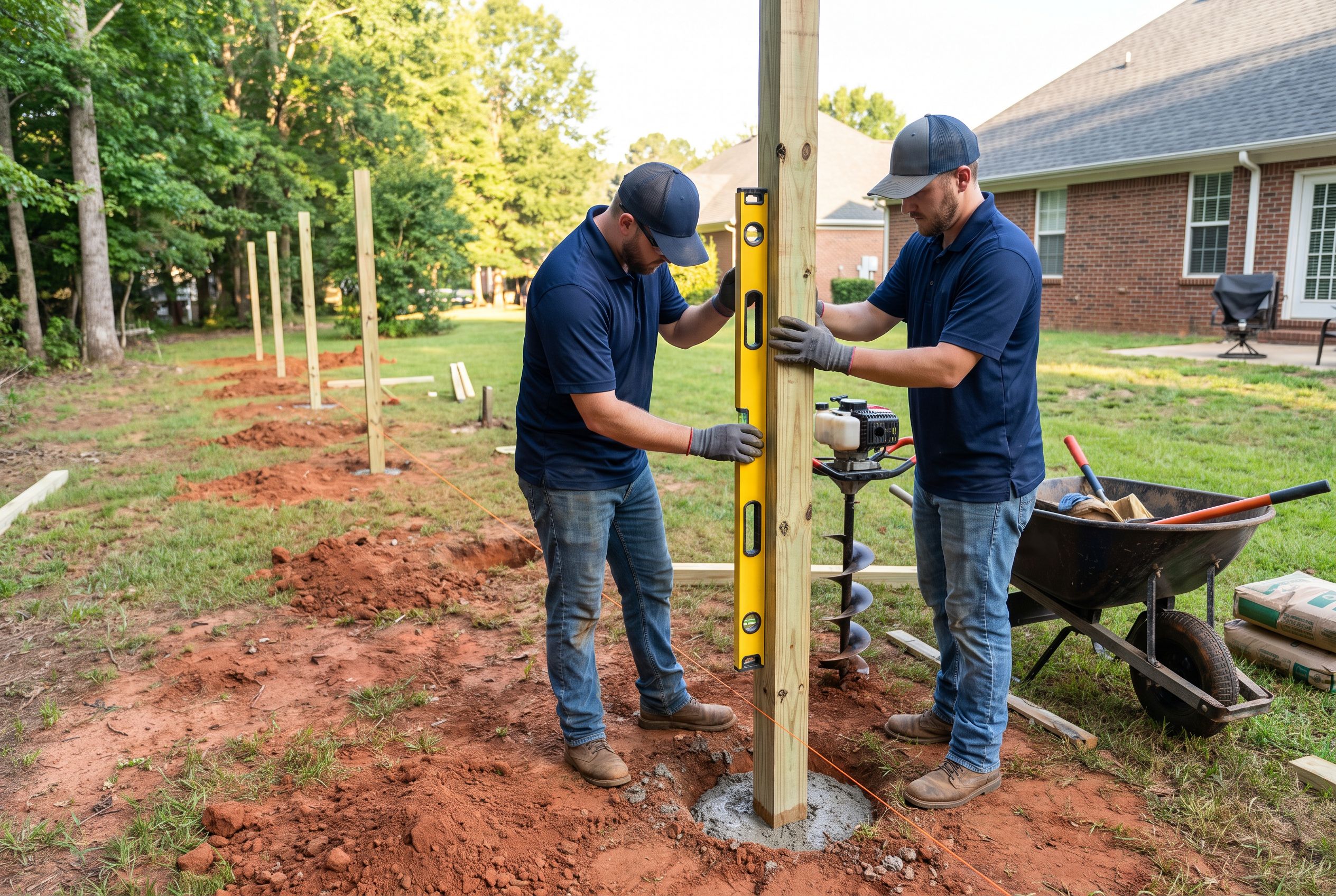
- Closer post spacing: To keep boards from sagging, posts are usually set closer together than on a vertical fence, which means more posts and more concrete.
- Precision labor: Long horizontal lines show every flaw. Boards must be level, evenly spaced and properly fastened, which takes more time.
- Material choice: Pressure-treated pine is the most budget-friendly option, cedar offers natural beauty and stability, and composite or aluminum slat systems cost more up front but need much less upkeep.
For a breakdown of how length, height, terrain and access affect any fence project, see our fence pricing page and our post on what drives privacy fence cost in Huntersville.
How to make a horizontal fence last
Durability comes down to structure and material. In our humid North Carolina climate, wood moves as it absorbs and releases moisture, so the build matters:
- Use posts spaced appropriately for the board length, with a center support where needed.
- Choose straight, quality boards. Cedar is naturally more stable and resistant to warping than pine.
- Add a top cap to shed water and help keep boards aligned.
- Seal or stain wood within the first year, and plan to refresh it every few years. Our fall staining guide explains timing.
- On sloped lots, plan for stepped sections. Horizontal boards can’t follow a slope the way vertical pickets can.
Design ideas to consider
- Mixed-width boards: Alternating 4- and 6-inch boards adds visual interest.
- Spaced slats: Small gaps between boards let air and light through while still offering good privacy.
- Dark stains or black accents: Charcoal and walnut tones look sharp against greenery and modern siding.
- Metal posts with wood boards: A sleek option that resists rot at the posts.
- Matching gates: A horizontal gate with a steel frame keeps the lines consistent and resists sagging. Explore our gate options.
Check HOA and town rules first
Some HOAs have specific rules about fence style, color and which side faces out. If your community requires approval, include drawings or photos of the horizontal design with your application.
Frequently asked questions
Are horizontal fences more expensive than vertical fences? Usually, yes. Horizontal designs typically use more material, closer post spacing and more careful labor to keep boards straight and level.
Do horizontal fence boards sag over time? They can if posts are spaced too far apart or the boards are too thin. Closer post spacing, quality boards and a center support or top cap help keep a horizontal fence straight for years.
How we help
We design and build horizontal fences in wood, composite and aluminum across Huntersville, Cornelius, Davidson and Mooresville. See examples and options on our horizontal fences page.
Love the horizontal look? Book a free estimate online at our booking page or call 980-404-9876. Zero dispatch fees.