Choosing a fence height sounds simple until you start planning. Too short and you won’t get the privacy or security you want. Too tall and you may run into HOA or zoning limits, or end up with a fence that feels like a wall. Here’s how to choose the right height for each part of your yard.
Start with why you want a fence
Your goal is the biggest factor in choosing a height:
- Privacy: Most homeowners choose 6 feet for backyard privacy. It blocks sightlines from neighboring yards for most people standing on the ground.
- Pets: Small dogs may be fine with 4 feet, while larger or athletic breeds usually need 5 to 6 feet. More on that in our upcoming guide to the best fences for dogs.
- Pool safety: Pool barriers generally must be at least 4 feet tall with self-closing, self-latching gates. See our pool fences page.
- Curb appeal and boundaries: Front yard fences are usually 3 to 4 feet, enough to define the space without blocking the view of your home.
- Security: Taller fences with fewer footholds are harder to climb.
Common fence heights at a glance
- 3 feet: Decorative front yard picket or garden fences
- 4 feet: Front yards, small pets, pool barriers and open aluminum fences
- 5 feet: A middle ground for medium dogs and partial privacy
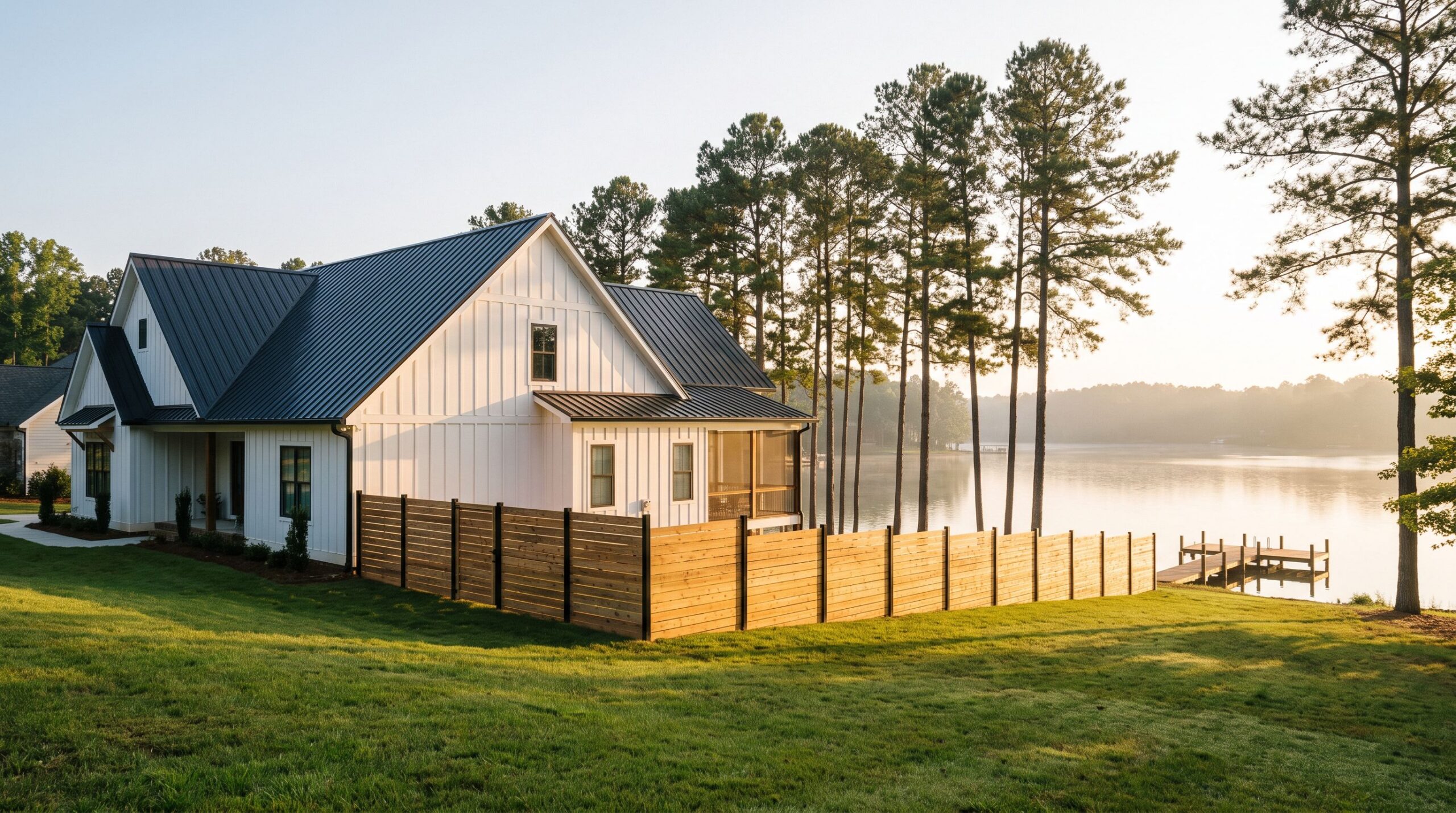
- 6 feet: The standard for backyard privacy fences
- 8 feet: Extra privacy where allowed, often along busy roads or commercial properties
Check the rules before you decide
In Huntersville and across the Lake Norman area, height is one of the most common reasons fence plans need revisions. Before you settle on a number:
- Town zoning: Most towns set maximum heights, and front yard limits are usually lower than backyard limits. Corner lots often have extra restrictions to keep sightlines clear for drivers. Our Huntersville fence permit guide covers what to check.
- HOA guidelines: Many HOAs limit height and require approval. Our HOA approval guide walks you through the process.
Consider your lot and terrain
On a sloped yard, a fence that’s 6 feet at the top of the hill may feel much shorter or taller at the bottom. Stepped panels or a racked design can keep the height consistent. If a neighbor’s deck or second-story window looks down on your yard, a taller section, a lattice topper or strategic landscaping may do more than raising the whole fence.
Mix heights where it makes sense
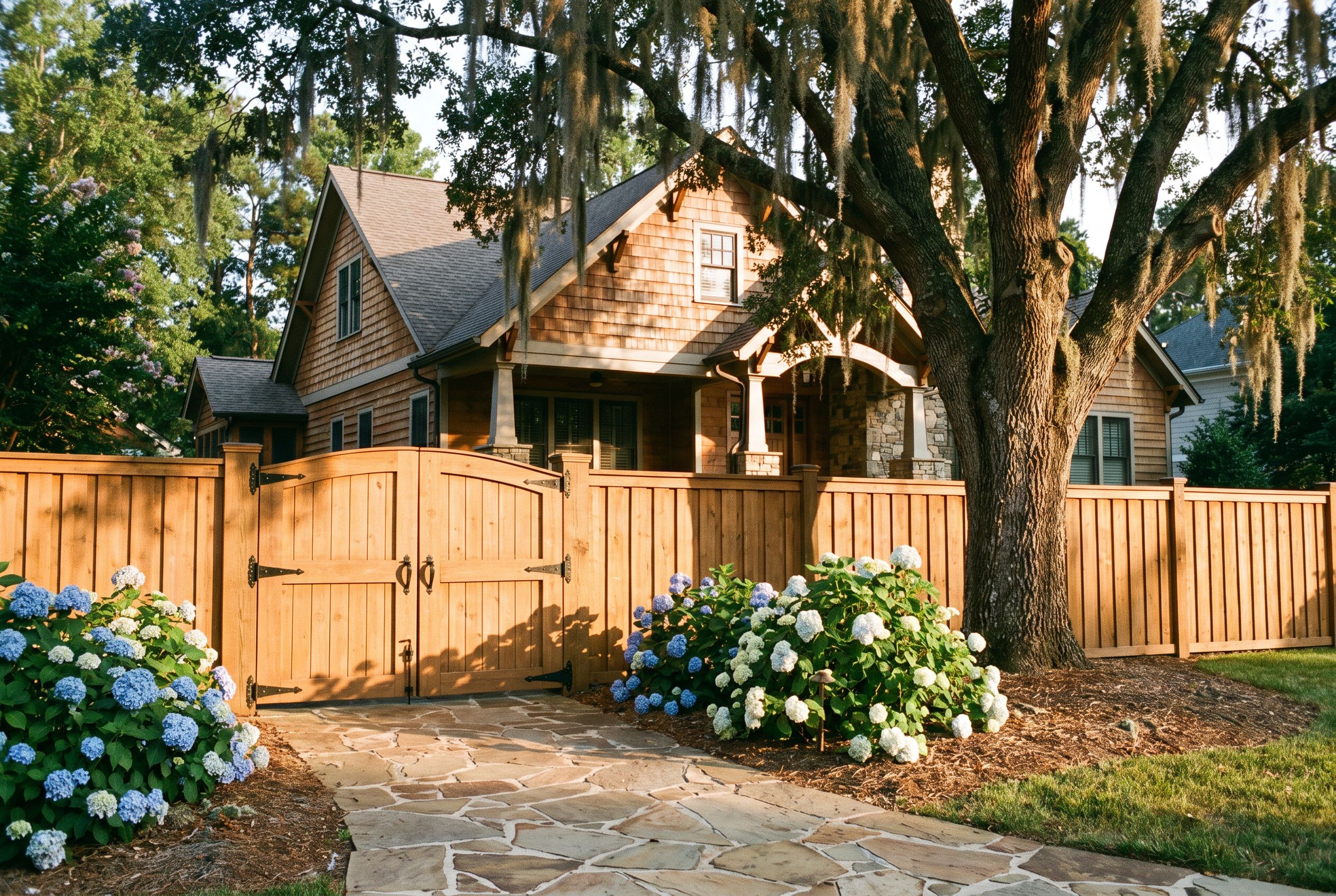
You don’t need the same height everywhere. A common setup is a 4-foot fence along the front and sides that steps up to 6 feet around the backyard. Transitions can be handled cleanly with tapered panels or a gate at the change.
Frequently asked questions
What is the most common backyard fence height? Six feet is the most common height for backyard privacy fences. It blocks most sightlines from the ground and is widely allowed by local zoning and HOAs.
How tall can a front yard fence be? Front yard fences are usually limited to a lower height than backyard fences, often around 3 to 4 feet. Check your town zoning and HOA guidelines before you plan.
How we help
Our team will walk your property, talk through your goals and recommend heights that meet local rules. Explore our privacy fence options to see what 6-foot designs look like.
Not sure what height you need? Book a free estimate online at our booking page or call 980-404-9876. Zero dispatch fees.