If you have a wood fence in Huntersville, Cornelius or anywhere around Lake Norman, fall is the season to protect it. After a long, humid Carolina summer, your fence has taken months of UV exposure, afternoon thunderstorms and red clay splash-back. A fresh coat of stain or sealer before winter is one of the easiest, most affordable ways to add years to its life.
Here’s why autumn is the sweet spot, how to tell if your fence needs attention, and what the process looks like.
Why fall is the best time to stain a fence in North Carolina
- Milder temperatures. Most stains apply best in moderate weather. In the heat of a Huntersville July, stain can dry too fast on sun-baked boards and leave lap marks. Fall days are usually more forgiving. Always follow the temperature range on the product label.
- Lower humidity. Our summers are muggy. Drier fall air helps stain soak in and cure properly.
- Protection before winter. Winter brings cold rain and the occasional freeze-thaw cycle. A sealed fence sheds that moisture instead of absorbing it, which helps prevent cracking, warping and rot.
- Easier scheduling. Spring is the busiest season for fence work. Fall projects are usually easier to fit into your calendar.
Five signs your fence needs stain or sealer
- The water test fails. Sprinkle water on a few boards. If it beads up, your protection is still working. If it soaks in and darkens the wood, it’s time.
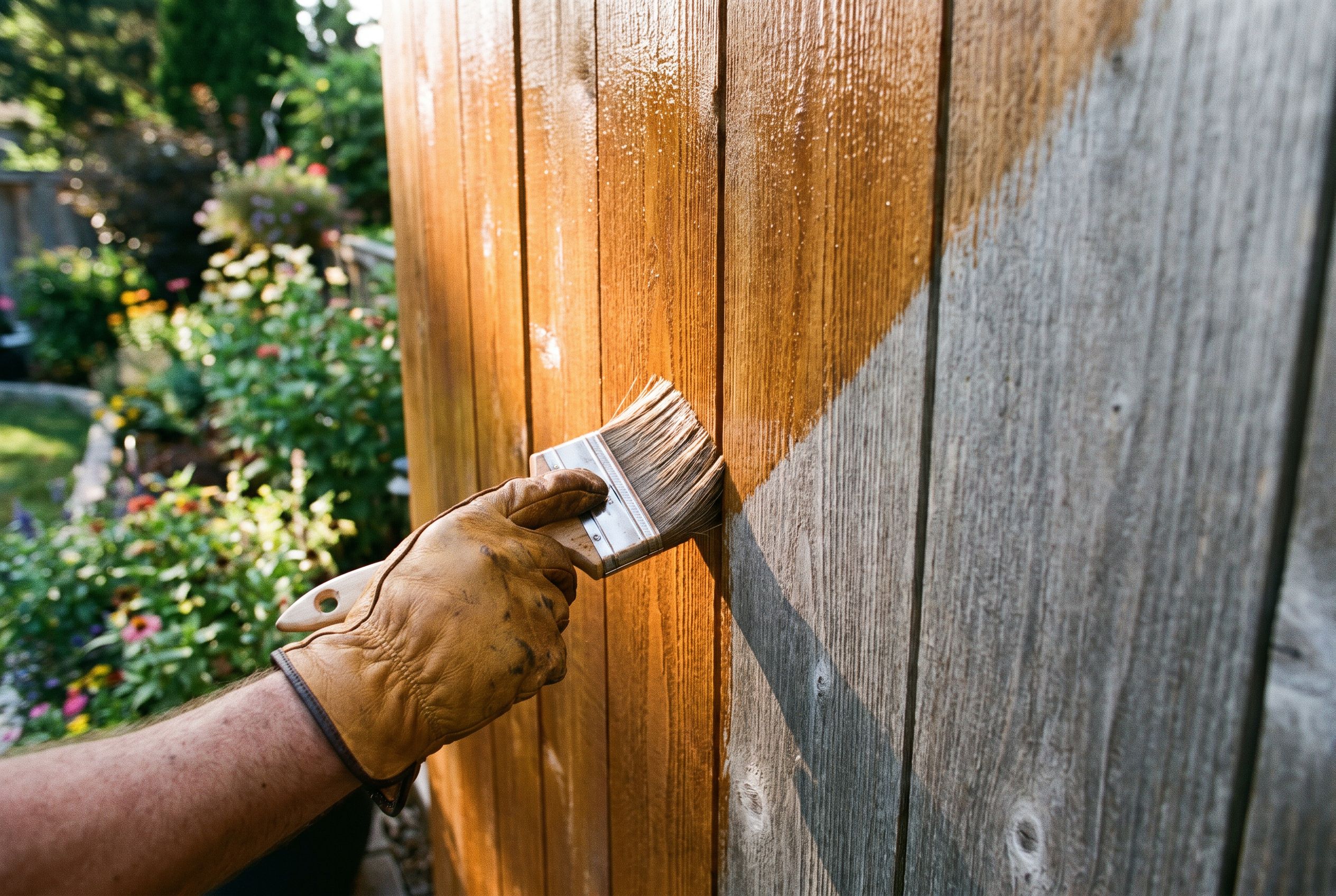
- Graying. That silver-gray color is UV breaking down the surface fibers of the wood.
- Splitting or checking. Small cracks get bigger as unprotected wood swells and shrinks.
- Mildew or green growth, especially on shaded sides of the fence.
- Red clay staining along the bottom boards from rain splash-back.
How often should you stain a wood fence?
In our climate, most wood fences benefit from re-staining or re-sealing every two to three years. Fences in full sun, or ones that get hit by sprinklers, may need it sooner. Cedar and pressure-treated pine both benefit from regular protection.
Have a brand-new fence? New pressure-treated wood often needs time to dry before it will accept stain. The water test above is a simple way to check. If water still beads on new wood because it’s saturated with treatment, give it more time.
Semi-transparent, solid or clear?
- Clear and toner sealers protect against water while showing off the natural wood. They typically need reapplying more often.
- Semi-transparent stains add color and UV protection while letting the grain show through. This is the most popular choice for cedar and pine privacy fences around Lake Norman.
- Solid stains look more like paint, giving uniform color and hiding imperfections on older fences.
What professional fence staining includes
A good stain job is mostly about preparation. When our team stains a fence, we:
- Inspect for loose boards, popped nails or rotted pickets and recommend repairs first
- Clean the fence to remove dirt, mildew and red clay so stain can penetrate evenly
- Protect plants, hardscapes and nearby surfaces
- Apply stain evenly, including the tops and edges of boards where water collects
Learn more on our fence staining and sealing page, or read our fence maintenance tips for year-round care.
DIY or hire a pro?
Staining a short run of fence is a reasonable weekend project. For a full backyard privacy fence, the cleaning, prep and two-sided application add up quickly. A professional crew can usually do it faster and with more even results. If your fence also has wobbly posts or broken boards, it’s smart to handle fence repairs before staining.
Want your fence protected before winter? Book a free estimate online at our booking page or call 980-404-9876. Zero dispatch fees.